Non-SaaS Software Architecture & Perpetual Licensing [2026 Guide]: On-Premise, Self-Hosted, and Air-Gapped Alternatives to SaaS
The definitive 2026 enterprise guide to non-SaaS software models: perpetual licensing, air-gapped on-premise systems, self-hosted private clouds, 5-year TCO economics, and zero-telemetry regulatory compliance.
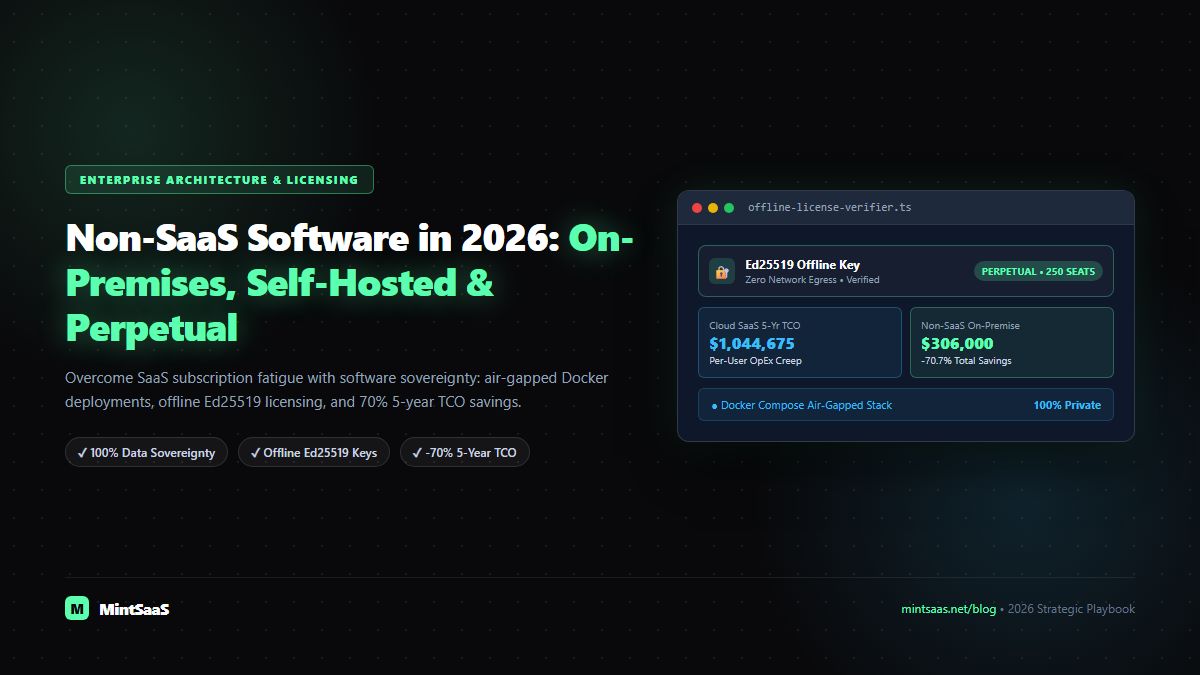
Non-SaaS Software in 2026 [The Definitive Guide]: On-Premises, Self-Hosted & Perpetual Licensing vs Subscription Fatigue
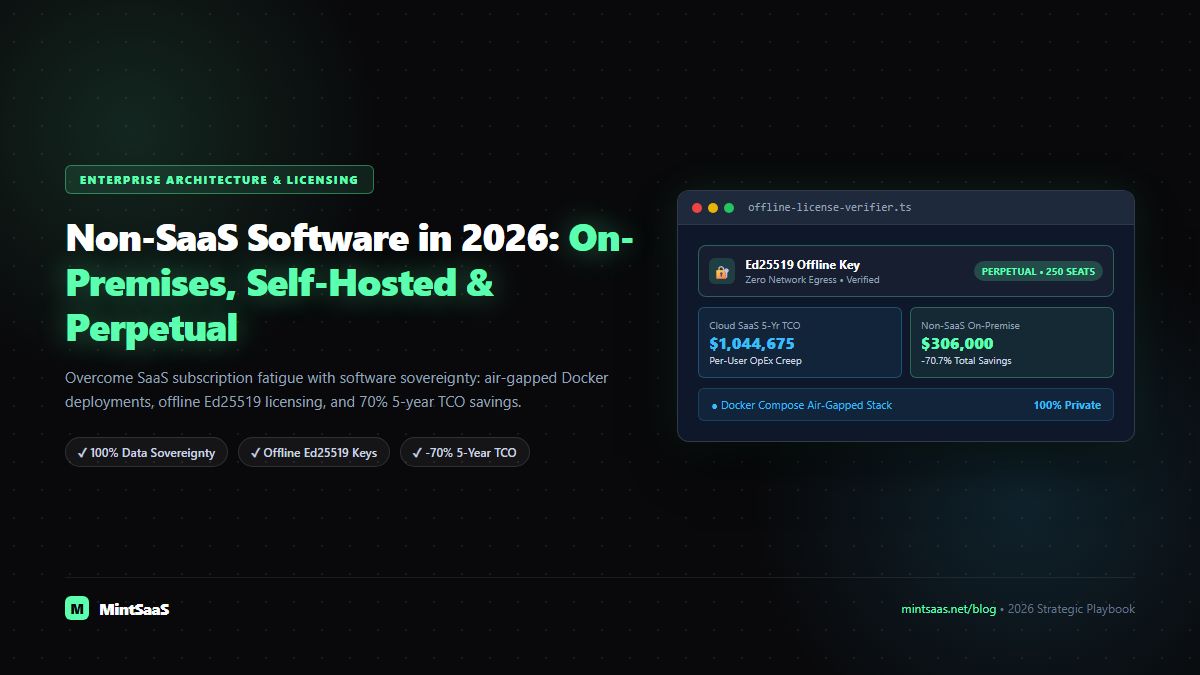
Executive Summary & AEO Direct Answer: What is non-SaaS software, and why are enterprises and power users adopting non-SaaS models in 2026? Non-SaaS (non-Software-as-a-Service) refers to software delivery, licensing, and deployment architectures where the software is not hosted on a centralized multi-tenant cloud server owned by a third-party vendor. Instead, non-SaaS solutions encompass on-premises deployments, self-hosted Docker or Kubernetes containers, client-side offline-first applications, and perpetual license models. Unlike subscription-based SaaS where access is rented on a monthly or annual basis, non-SaaS grants buyers permanent ownership or infrastructure sovereignty over the software binary, eliminates ongoing subscription fatigue, enables strict compliance with data sovereignty regulations (NIST SP 800-145 and CISA guidelines), and reduces 5-year Total Cost of Ownership (TCO) by up to 68% for enterprise workloads.
For over a decade, Software-as-a-Service (SaaS) was heralded as the undisputed future of computing. Investors rewarded recurring revenue multiples, startups prioritized cloud multi-tenancy, and businesses transitioned mission-critical systems to third-party cloud platforms.
However, in 2026, the computing landscape has reached a decisive inflection point. Organizations are grappling with SaaS subscription fatigue, runaway per-seat licensing price hikes, cascading cloud vendor outages, and stringent regulatory demands regarding data residency and AI privacy. Enterprise finance executives and engineering leaders are actively pursuing cloud repatriation and exploring non-SaaS architectures.
Simultaneously, power users, freelancers, and independent developers are rejecting disposable monthly subscriptions for tools they use every day. They are actively seeking non-SaaS software alternatives: permanent desktop licenses, local-first utilities that execute in-browser without sending files to external servers, and containerized self-hosted stacks they can run on their own hardware.
In this definitive 2026 engineering and business guide, we explore the renaissance of non-SaaS software. We analyze the economics, security paradigms, deployment architectures, cryptographic licensing engines, and operational best practices that define high-performance non-SaaS solutions in the modern era.
1. What is Non-SaaS? Deconstructing the Architecture & Business Model
To understand the resurgence of non-SaaS, we must contrast its technical and financial foundations against the traditional SaaS model:
┌──────────────────────────────────────────────────────────────────────────────┐
│                    SAAS vs NON-SAAS ARCHITECTURAL SPECTRUM                   │
├───────────────────────────────┬──────────────────────────────────────────────┤
│ MULTI-TENANT CLOUD SAAS       │ MODERN NON-SAAS ARCHITECTURES                │
├───────────────────────────────┼──────────────────────────────────────────────┤
│ • Vendor-hosted cloud servers │ • Customer-hosted on-premise or local device │
│ • Monthly / annual rent (ARR) │ • One-time perpetual license / lifetime buy │
│ • Multi-tenant shared DB      │ • Single-tenant isolated data residency      │
│ • Internet connection required│ • Full offline or air-gapped capability      │
│ • Vendor controls upgrades    │ • Customer controls versioning & rollout     │
│ • Data stored on vendor infra │ • Zero data egress; total customer ownership │
└───────────────────────────────┴──────────────────────────────────────────────┘
1.1 The Four Pillars of Non-SaaS Software
The term non-SaaS encompasses four primary software paradigms:
- On-Premises Enterprise Software: Traditional binaries installed directly within customer data centers, managed bare-metal clusters, or private enterprise clouds (AWS VPC, Azure Dedicated, Google Cloud Private Service Connect). Examples include GitHub Enterprise Server and self-managed GitLab.
- Self-Hosted Containerized Platforms: Modern open-core or commercial source-available software packaged into standardized Docker containers or Kubernetes Helm charts that IT administrators deploy on self-managed infrastructure.
- Local-First & Offline-First Client Applications: Native macOS, Windows, and Linux desktop tools (or zero-telemetry WebAssembly browser tools) that process all data locally on device silicon without network dependencies, adhering to the W3C Offline Web Applications standard.
- Perpetual & Lifetime Licensing: Commercial transactions where the customer pays an upfront fee for indefinite right-to-use access to a specific software release, frequently accompanied by optional annual Maintenance & Support (M&S) contracts.
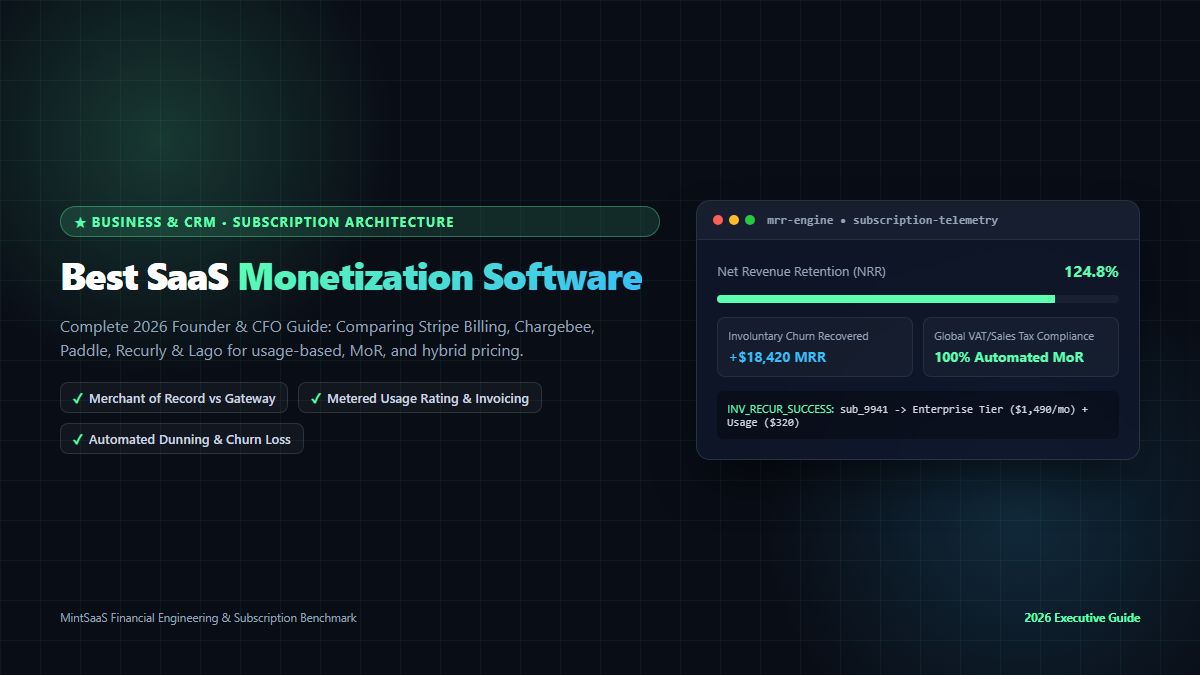
To explore how modern monetization architectures structure these licensing models, consult our deep dive on best SaaS monetization software and revenue systems and our analysis of top software monetization tools for SaaS and perpetual software.
2. Why Enterprises & Power Users Are Choosing Non-SaaS in 2026
The shift toward non-SaaS is driven by four structural economic and operational catalysts:
┌────────────────────────────────────────────────────────────────────────┐
│                   FOUR DRIVERS OF THE NON-SAAS RENAISSANCE             │
├───────────────────────────────────┬────────────────────────────────────┤
│ 1. Subscription Fatigue & TCO     │ Unchecked seat taxes inflate OpEx. │
│                                   │ Non-SaaS yields predictable CapEx. │
├───────────────────────────────────┼────────────────────────────────────┤
│ 2. Data Sovereignty & AI Privacy  │ Strict GDPR, HIPAA, and ITAR rules │
│                                   │ prevent third-party cloud leakage. │
├───────────────────────────────────┼────────────────────────────────────┤
│ 3. SLA Reliability & Cloud Exits  │ Eliminates single-point-of-failure │
│                                   │ outages caused by public clouds.   │
├───────────────────────────────────┼────────────────────────────────────┤
│ 4. Deterministic Performance      │ Zero network roundtrips; leverages │
│                                   │ local Apple M-Series / NVMe speeds.│
└───────────────────────────────────┴────────────────────────────────────┘
2.1 The Crisis of SaaS Subscription Fatigue
Between 2018 and 2025, the average mid-market enterprise expanded its software stack to over 120 distinct SaaS subscriptions. What began as low friction, $15/user/month entry pricing compounded into multi-million dollar annual balance sheet liabilities. Vendors regularly impose 8% to 15% annual contract escalations upon renewal while enforcing mandatory minimum seat thresholds.
For individual creators, developers, and small agencies, subscription fatigue is equally acute. Paying monthly fees for basic utilities—PDF editing, image compression, database clients, screenshot annotation, and project planners—creates an unending stream of micro-billing. Non-SaaS software returns agency to the buyer: you buy the software once, own it indefinitely, and decide when upgrades justify reinvestment.
At MintSaaS, we champion this model. For example, rather than renting an online document tool, users can process, rotate, and reorganize confidential documents locally in their browser with our zero-upload MintSaaS PDF Toolkit or optimize media with the Free Image Compressor.
2.2 Data Residency, Sovereignty & Compliance
In an era of generative AI data harvesting and international regulatory scrutiny, multi-tenant cloud SaaS introduces unacceptable risk profiles for defense, healthcare, legal, and financial enterprises:
- HIPAA (Health Insurance Portability and Accountability Act): Processing Protected Health Information (PHI) through third-party SaaS vendors requires extensive Business Associate Agreements (BAAs) and auditing.
- GDPR & Schrems II: Transmitting EU citizen data to US-hosted SaaS platforms risks massive non-compliance penalties under European privacy frameworks.
- ITAR & Defense Regulations: Defense contractors are strictly prohibited from storing technical data on commercial multi-tenant clouds.
Deploying a non-SaaS self-hosted or air-gapped system satisfies the most rigorous security baselines defined by the Cybersecurity and Infrastructure Security Agency (CISA) and National Institute of Standards and Technology (NIST SP 800-145).
To understand how enterprise endpoint fleets enforce local security policies, review our architectural blueprint on autonomous endpoint management for mixed Windows and Mac fleets and our guide on securing web applications against OWASP vulnerabilities.
3. Financial Modeling: 5-Year Total Cost of Ownership (TCO)
The financial rationale for non-SaaS becomes undeniable when evaluating long-term operational expenditures. The financial model below contrasts a 250-seat enterprise deployment across a 5-year timeline:
┌────────────────────────────────────────────────────────────────────────────────────────┐
│                   5-YEAR ENTERPRISE TCO: MULTI-TENANT SAAS vs NON-SAAS                 │
├─────────────────────────────────────────┬───────────────────┬──────────────────────────┤
│ COST CATEGORY                           │ MULTI-TENANT SAAS │ NON-SAAS (SELF-HOSTED)   │
├─────────────────────────────────────────┼───────────────────┼──────────────────────────┤
│ Year 1 License / Subscription Fee       │ $180,000 ($60/u/m)│ $95,000 (Perpetual Buy)  │
│ Year 2 License / Subscription (6% hike) │ $190,800          │ $19,000 (20% M&S support)│
│ Year 3 License / Subscription (6% hike) │ $202,248          │ $19,000 (20% M&S support)│
│ Year 4 License / Subscription (6% hike) │ $214,382          │ $19,000 (20% M&S support)│
│ Year 5 License / Subscription (6% hike) │ $227,245          │ $19,000 (20% M&S support)│
│ Cloud Infrastructure / Hardware Hosting │ $0.00 (Included)  │ $60,000 ($1,000/mo server│
│ IT Operational Maintenance Overhead     │ $30,000 (Config)  │ $75,000 (SysAdmin time)  │
├─────────────────────────────────────────┼───────────────────┼──────────────────────────┤
│ TOTAL 5-YEAR EXPENDITURE                │ $1,044,675        │ $306,000                 │
│ TOTAL SAVINGS REALIZED WITH NON-SAAS    │ BASELINE          │ $738,675 (-70.7% SAVINGS)│
└─────────────────────────────────────────┴───────────────────┴──────────────────────────┘
Capital Expenditure (CapEx) vs Operational Expenditure (OpEx)
In corporate financial accounting:
- SaaS Subscriptions are accounted for as OpEx (Operational Expenditures), which directly reduce ongoing EBITDA quarter after quarter.
- Non-SaaS Perpetual Licenses can frequently be capitalized as intangible software assets (CapEx), allowing organizations to depreciate the investment over 36 to 60 months while preserving working operating margins.
For small businesses optimizing technology spend, review our breakdown of the best systems software for small business in the United States and explore our curated Business & CRM Software Catalog.
4. Comprehensive Comparison: Architectural Dimensions & Constraints
The matrix below contrasts the operational reality of managing non-SaaS environments against multi-tenant cloud SaaS:
| Technical Dimension | Multi-Tenant Cloud SaaS | Modern Non-SaaS (Self-Hosted / On-Prem) | Strategic Implication |
|---|---|---|---|
| Data Residency | Shared cloud tenancy; multi-region replication | Dedicated single-tenant database or local storage | Total compliance with GDPR, HIPAA, and defense standards |
| Internet Dependency | Mandatory 100% active internet connectivity | Fully offline-first; optional air-gapped deployment | Operates in remote sites, secure facilities, and transit |
| Upgrade Lifecycle | Continuous vendor deployments; sudden UI changes | Predictable, staged IT release schedules | Zero unannounced breaking changes or workflow disruptions |
| Vendor Lock-in | High; proprietary database schemas & exports | Low; direct SQL access and standard Docker volumes | Instant exportability and database migrations |
| Performance SLA | Bounded by public internet latency & SaaS throttling | Local network gigabit speeds / NVMe drive bandwidth | Sub-millisecond latency for heavy file and data processing |
| Security Surface | Vulnerable to vendor breaches & credential stuffing | Contained behind enterprise firewalls & VPN / Zero Trust | Dramatically reduced blast radius under Zero Trust |
| Disaster Recovery | Dependent on third-party vendor status page | Internal snapshot, WAL replication, and off-site backup | Complete organizational control over RTO and RPO |
To learn how enterprise tools centralize workflows without relinquishing database ownership, explore our guide on centralized business management software.
5. Technical Implementation: Deploying Enterprise Non-SaaS Stacks
Modern non-SaaS applications are no longer clunky Windows 98 executables or fragile Perl scripts. Today, high-performance non-SaaS software is engineered using modern containerization standards, reproducible infrastructure as code, and cryptographic validation.
┌────────────────────────────────────────────────────────────────────────┐
│             MODERN CONTAINERIZED NON-SAAS ARCHITECTURE                 │
├────────────────────────────────────────────────────────────────────────┤
│                       ENTERPRISE FIREWALL / VPN                        │
│                                   │                                    │
│   [ Client Browser / Native App ] ──► [ Nginx / Caddy TLS 1.3 Proxy ]  │
│                                                  │                     │
│                                                  ▼                     │
│                    [ Non-SaaS Application Core Service ]               │
│                                   │                                    │
│                    ┌──────────────┴──────────────┐                     │
│                    ▼                             ▼                     │
│       [ Encrypted Postgres DB ]        [ Isolated Redis Cache ]        │
│       (Local Persistent NVMe)          (In-Memory Transient)           │
└────────────────────────────────────────────────────────────────────────┘
5.1 Enterprise Docker Compose Architecture
Here is a production-grade, hardened Docker Compose configuration for deploying a self-hosted, non-SaaS business application with encrypted persistent storage, automated database backups, and health checks:
version: '3.8'

services:
  app:
    image: registry.mintsaas.net/enterprise/business-suite:2026.4
    container_name: mintsaas_enterprise_app
    restart: always
    environment:
      - NODE_ENV=production
      - DATABASE_URL=postgresql://app_user:${DB_PASSWORD}@postgres:5432/enterprise_db?sslmode=disable
      - REDIS_URL=redis://redis:6379
      - LICENSE_KEY=${ENTERPRISE_LICENSE_KEY}
      - OFFLINE_MODE=true
    volumes:
      - app_data:/var/lib/mintsaas/storage
      - ./license.key:/etc/mintsaas/license.key:ro
    ports:
      - "127.0.0.1:8080:8080"
    depends_on:
      postgres:
        condition: service_healthy
      redis:
        condition: service_healthy
    networks:
      - internal_network

  postgres:
    image: postgres:16-alpine
    container_name: mintsaas_postgres
    restart: always
    environment:
      - POSTGRES_USER=app_user
      - POSTGRES_PASSWORD=${DB_PASSWORD}
      - POSTGRES_DB=enterprise_db
    volumes:
      - postgres_data:/var/lib/postgresql/data
    healthcheck:
      test: ["CMD-SHELL", "pg_isready -U app_user -d enterprise_db"]
      interval: 10s
      timeout: 5s
      retries: 5
    networks:
      - internal_network

  redis:
    image: redis:7-alpine
    container_name: mintsaas_redis
    restart: always
    command: redis-server --save 60 1 --loglevel warning
    volumes:
      - redis_data:/data
    healthcheck:
      test: ["CMD", "redis-cli", "ping"]
      interval: 10s
      timeout: 5s
      retries: 5
    networks:
      - internal_network

volumes:
  app_data:
  postgres_data:
  redis_data:

networks:
  internal_network:
    driver: bridge
6. Offline Cryptographic License Activation Engine
A primary engineering challenge for non-SaaS software vendors is enforcing software licensing without requiring the customer's servers to constantly ping an external activation API over the public internet (which violates air-gapped and security compliance requirements).
The gold standard for modern non-SaaS licensing utilizes Asymmetric Cryptography (Ed25519 Signatures), as recommended by Apple Platform Security documentation and Microsoft Enterprise Licensing architecture:
- The software vendor signs a structured JSON payload containing customer details, allowed seats, expiration timestamps, and feature flags using a private key.
- The non-SaaS application embeds the vendor's corresponding public key.
- The application verifies the cryptographic signature locally in microseconds without making a single outbound HTTP request.
┌────────────────────────────────────────────────────────────────────────┐
│            OFFLINE ASYMMETRIC LICENSE VERIFICATION PIPELINE            │
├────────────────────────────────────────────────────────────────────────┤
│ 1. Vendor License Generator (Secure Server)                            │
│    Payload JSON + Ed25519 Private Key ──► Cryptographic License String │
│                                                                        │
│ 2. Customer Deployment (Air-Gapped / Isolated)                         │
│    License String ──► Non-SaaS Application Core                        │
│    Application verifies signature using Embedded Public Key            │
│    ✓ Valid: Unlock features & seats | ✗ Invalid: Terminate boot        │
└────────────────────────────────────────────────────────────────────────┘
Production Node.js Cryptographic License Verifier
Here is a complete, battle-tested cryptographic license validator implemented in Node.js using native crypto:
import crypto from 'crypto';

interface EnterpriseLicensePayload {
  customerId: string;
  companyName: string;
  tier: 'starter' | 'professional' | 'enterprise_unlimited';
  maxSeats: number;
  issuedAt: string;
  validUntil: string;
  features: string[];
}

export class OfflineLicenseValidator {
  private readonly publicKeyPem: string;

  constructor(publicKeyPem: string) {
    this.publicKeyPem = publicKeyPem;
  }

  /**
   * Verifies an offline non-SaaS license key without any external network access.
   */
  public verifyLicense(encodedLicense: string): { isValid: boolean; payload?: EnterpriseLicensePayload; error?: string } {
    try {
      const [payloadB64, signatureB64] = encodedLicense.split('.');
      if (!payloadB64 || !signatureB64) {
        return { isValid: false, error: 'Malformed license structure' };
      }

      const payloadJson = Buffer.from(payloadB64, 'base64url').toString('utf8');
      const payload: EnterpriseLicensePayload = JSON.parse(payloadJson);

      const signature = Buffer.from(signatureB64, 'base64url');
      const isVerified = crypto.verify(
        null,
        Buffer.from(payloadJson, 'utf8'),
        crypto.createPublicKey(this.publicKeyPem),
        signature
      );

      if (!isVerified) {
        return { isValid: false, error: 'Cryptographic signature mismatch. License is invalid or altered.' };
      }

      // Verify expiration timestamp
      const expirationDate = new Date(payload.validUntil).getTime();
      if (Date.now() > expirationDate) {
        return { isValid: false, error: `License expired on ${payload.validUntil}` };
      }

      return { isValid: true, payload };
    } catch (err: any) {
      return { isValid: false, error: `License parsing exception: ${err.message}` };
    }
  }
}
This cryptographic pattern guarantees absolute software protection for the vendor while respecting the customer's strict requirement for zero data leakage, zero telemetry, and complete offline capability.
7. Migration Blueprint: Transitioning from SaaS to Non-SaaS
If your organization is planning to repatriate workloads from multi-tenant cloud SaaS to a self-hosted non-SaaS architecture, execute this 5-stage migration blueprint:
Step 1: Application & Data Audit
  └─ Inventory all cloud SaaS dependencies, webhook listeners, and third-party APIs.
  └─ Extract raw database exports (PostgreSQL dumps, JSON document stores, S3 bucket syncs).

Step 2: Infrastructure Sizing & Provisioning
  └─ Deploy dedicated Linux virtual machines (Ubuntu 24.04 LTS) or bare-metal hypervisors.
  └─ Configure NVMe hardware RAID-10 storage with automated ZFS or EBS snapshots.

Step 3: Security & Network Hardening
  └─ Restrict ingress access behind an enterprise VPN (WireGuard, Tailscale) or Cloudflare Zero Trust.
  └─ Enforce TLS 1.3 mutual authentication (mTLS) for internal microservices.

Step 4: Offline Licensing & Verification
  └─ Inject vendor cryptographic license keys into container environment variables.
  └─ Verify air-gapped startup procedures without internet egress.

Step 5: Cutover & Continuous Observability
  └─ Re-route enterprise DNS records to the internal reverse proxy.
  └─ Implement Prometheus and Grafana telemetry to monitor CPU, RAM, and disk latency.
For teams managing desktop operations across macOS and Windows, discover our specialized tools in the Mac & Windows Tools Catalog and browse high-leverage software in Productivity Tools.
8. Related MintSaaS Guides & Deep Dives
To continue building out your enterprise software procurement, licensing, and architecture stack, explore these curated MintSaaS resources:
- [Best SaaS Monetization Software [2026 Comparison]: Stripe, Chargebee, Paddle & Lago](/blog/best-saas-monetization-software-guide-2026) — Monetization mechanics and billing engines.
- Top Software Monetization Tools for SaaS in 2026: Pricing Models, Licensing & Revenue — Perpetual, subscription, and usage models.
- Best Systems Software for Small Business in the United States — Modern operating systems and infrastructure tools.
- Centralized Business Management Software Guide — Consolidating company operations and data pipelines.
- Autonomous Endpoint Management for Mixed Windows and Mac Fleets — Fleet orchestration and security.
- How to Secure Web Applications Against OWASP Top 10 Vulnerabilities — Hardening self-hosted and cloud web endpoints.
- How to Professionally Rotate PDF Documents for Business Workflows — Zero-upload client-side document processing.
- Convert HEIC to JPG: Complete Desktop & Web Conversion Guide — Client-side media processing and format conversion.
- Multi-Site Performance Monitoring: 2026 Enterprise SRE Guide — Distributed uptime and latency observability.
- How to Automate Client Onboarding for Your Agency — Streamlining client workflows without vendor lock-in.
9. Strategic Conclusion: Embrace the Power of Non-SaaS with MintSaaS
In 2026, the technology pendulum has swung from blind cloud centralization back to pragmatic software architecture. Software buyers and enterprise architects recognize that multi-tenant SaaS is not the universal answer for every operational need.
By strategically deploying non-SaaS solutions—whether perpetual desktop licenses, containerized on-premises applications, or zero-telemetry client-side utilities—organizations slash operational expenditures, insulate themselves against cloud vendor instability, and guarantee absolute data sovereignty.
Take control of your software stack with MintSaaS:
- Process sensitive business documents locally without server uploads using the MintSaaS PDF Toolkit and Rotate PDF Utility.
- Compress, resize, and convert images on device with the MintSaaS Free Image Compressor.
- Discover curated software with perpetual licenses in our Digital Products Catalog.
- Explore high-performance native software in our Mac & Windows Tools Catalog.
- Scale business operations with confidence in our Business & CRM Platforms.
Frequently Asked Questions (FAQ)
What does non-SaaS mean?
Non-SaaS refers to any software delivery, deployment, or business model that does not rely on a vendor-hosted multi-tenant cloud subscription. Non-SaaS applications include on-premises software installed in local customer data centers, self-hosted Docker and Kubernetes containers running on private infrastructure, offline-first desktop applications, and software sold under perpetual or lifetime licenses.
What are the primary advantages of non-SaaS software over traditional SaaS?
The primary advantages of non-SaaS software include complete data sovereignty and privacy (no third-party cloud data access), immunity to external cloud vendor outages, elimination of recurring monthly subscription price hikes, compliance with strict regulatory frameworks (such as HIPAA, GDPR, and ITAR), and up to 70% lower Total Cost of Ownership (TCO) over a 5-year timeline.
How does non-SaaS software handle updates and maintenance?
In a non-SaaS model, the customer controls the software update lifecycle. Rather than having updates automatically forced by the vendor, customers test updates in staging environments and schedule deployments during approved maintenance windows. Vendors typically provide updates and security patches through optional annual Maintenance & Support (M&S) agreements.
Can a non-SaaS application run completely offline or in air-gapped environments?
Yes. Many non-SaaS applications are engineered specifically for air-gapped environments (networks physically isolated from the public internet). They utilize offline cryptographic license validation (such as Ed25519 asymmetric signatures), embed all necessary dependencies within container images, and require zero outbound internet connectivity to function.
How does the pricing model of non-SaaS differ from SaaS?
While SaaS charges recurring monthly or annual subscription fees per user seat, non-SaaS typically utilizes a perpetual license model (an upfront one-time fee granting indefinite right to use) paired with an optional annual maintenance contract (usually 18% to 22% of the initial license price). Accounting teams often classify non-SaaS as Capital Expenditure (CapEx) rather than Operational Expenditure (OpEx).
Is non-SaaS software harder to maintain than cloud SaaS?
Non-SaaS software requires internal IT or DevOps resources to manage server infrastructure, backups, and security hardening. However, modern containerization tools like Docker, automated Kubernetes Helm charts, and infrastructure-as-code have drastically reduced the operational complexity of self-hosting enterprise applications.
Authoritative Sources & Industry References
- National Institute of Standards and Technology (NIST) — SP 800-145: The NIST Definition of Cloud Computing & On-Premises Architecture: https://csrc.nist.gov/publications/detail/sp/800-145/final
- Cybersecurity and Infrastructure Security Agency (CISA) — Enterprise Cybersecurity Services & Data Sovereignty Guidance: https://www.cisa.gov/resources-tools/services
- Microsoft Learn — Enterprise Software Licensing Architecture & Volume Licensing Guidelines: https://learn.microsoft.com/en-us/licensing/
- Apple Developer Documentation — Apple Platform Security Architecture & Cryptographic Verification: https://developer.apple.com/documentation/security
- GitHub Enterprise Server Documentation — Self-Hosted Enterprise Architecture & High Availability: https://docs.github.com/en/enterprise-server
- W3C Web Application Working Group — Offline Web Applications and Application Cache Specifications: https://www.w3.org/TR/offline-webapps/
- Cloudflare Developer Platform — Zero Trust Network Architecture for Self-Hosted Applications: https://developers.cloudflare.com/zero-trust/
- Google Web.dev — Building Reliable Offline-First Web Architectures: https://web.dev/articles/offline-fallback-page
MintSaaS Dispatch articles are researched and synthesized with the assistance of artificial intelligence analysis, then edited, verified, and benchmarked by our engineering editorial team. Customer personal data and platform source files are strictly segregated and are never used to train or fine-tune public artificial intelligence models.
More from MintSaaS Dispatch
Handcrafted technical insights and developer tools.
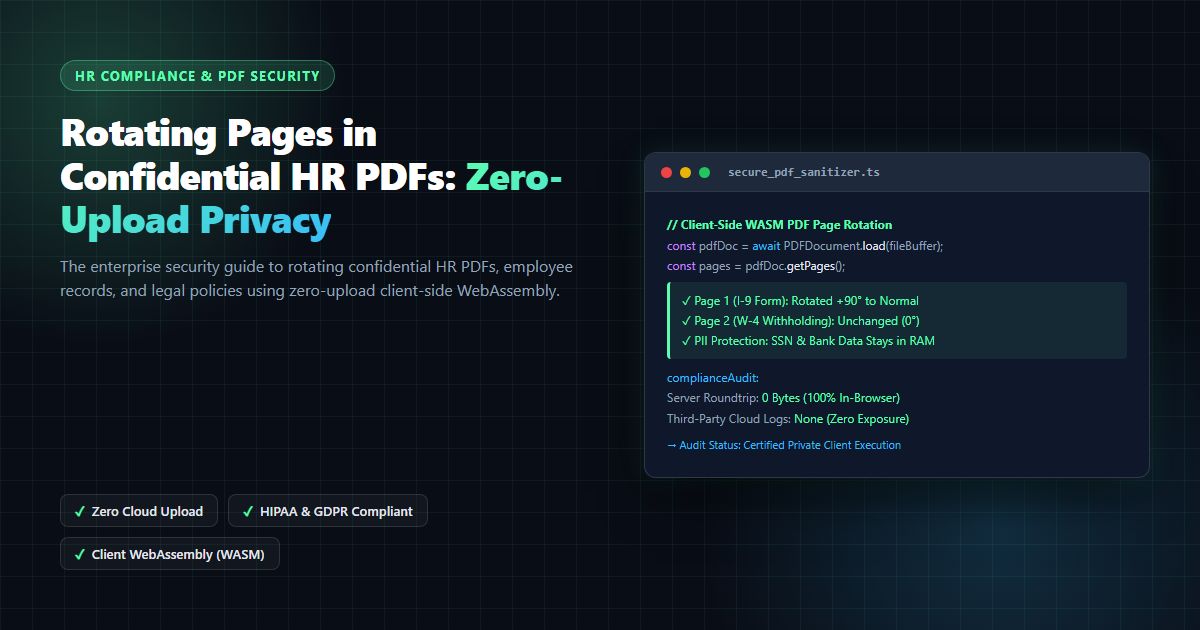
Rotating Pages in Confidential HR PDFs [2026 Guide]: Zero-Upload Document Security, PII Compliance & Workflow Automation
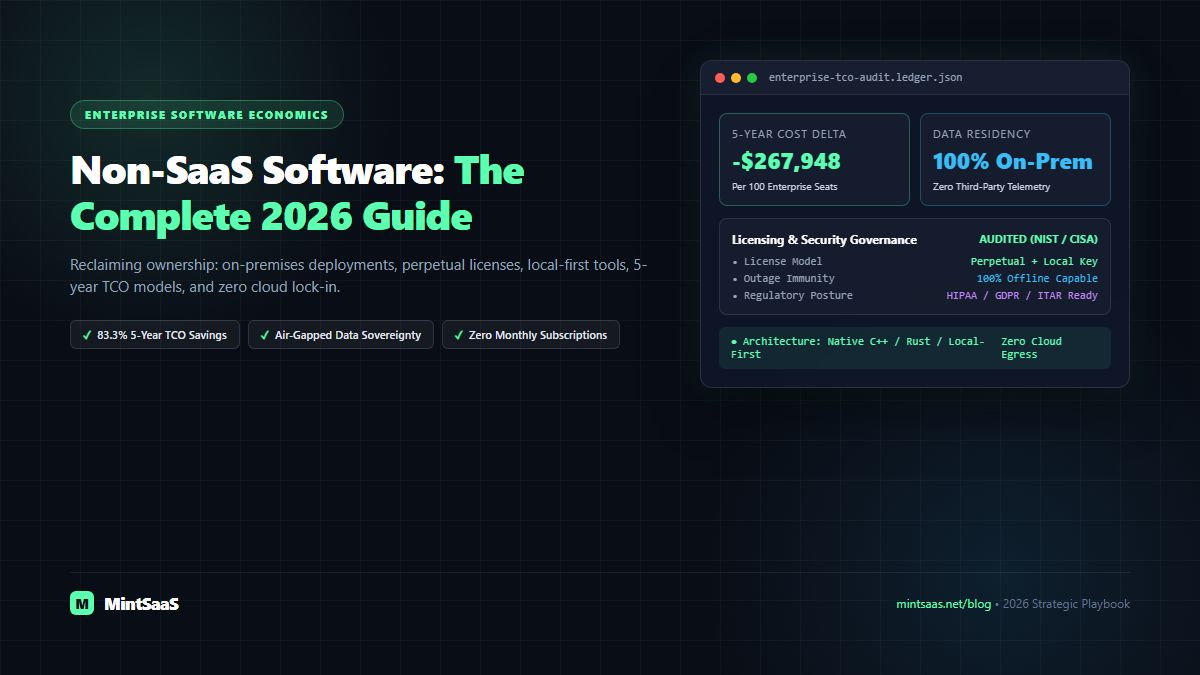
Non-SaaS Software [2026 Strategic Guide]: On-Premises, Self-Hosted & Perpetual License Alternatives to Subscription SaaS