How to Grow on Instagram in 2027: A Practical Growth Guide
A practical 2027 Instagram growth plan: sharpen your niche, make useful original content, improve search discovery, build community, and measure what turns reach into loyal followers.
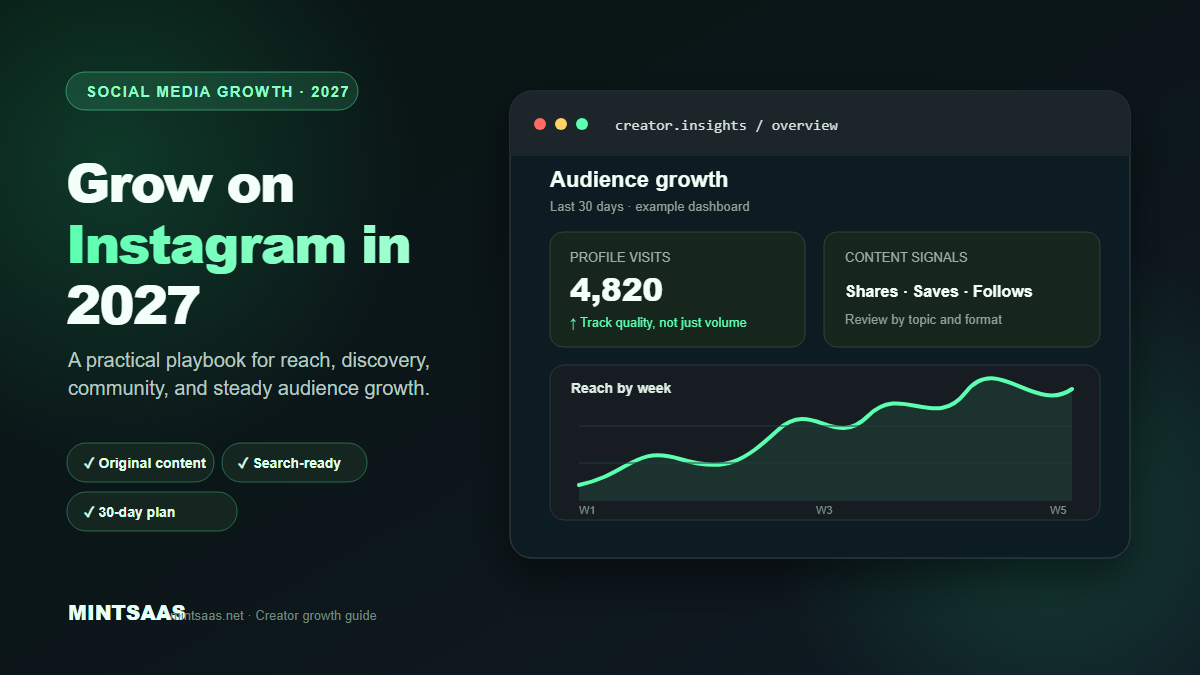
How to Grow on Instagram in 2027: A Practical Growth Guide
Quick answer: To grow on Instagram in 2027, focus on a clearly defined audience, publish original content that helps or entertains them, make your profile and captions easy to understand in search, and use Insights to learn which posts bring meaningful profile visits, shares, saves, and follows. There is no dependable posting trick that guarantees growth. Instagram ranks content differently across its surfaces, so build for people first and refine your approach using your own account data.[1][3]
Instagram growth is easier to think about when you stop treating it like a slot machine. A post can reach new people through Reels, Explore, Search, recommendations, shares, or someone else’s Story. Each path has a different context. A quick, funny clip may catch someone’s attention; a clear tutorial may be saved for later; a local business post may be useful because it names a neighborhood and shows the actual service.
So don’t focus only on “How do I get more views?” Ask what would make the right person stop, care, and want more from your account.
This guide gives creators, small businesses, and independent experts a practical Instagram growth plan for 2027. Features and ranking systems can change, so treat these tactics as a framework to test, not as promises about a fixed algorithm.
Start with a profile that earns the follow
Discovery creates an opportunity. When someone new visits your profile, they need to understand who the account helps, what it shares, and what to do next.
Use a name field that includes your name or brand and a plain-language description of your topic. Use your bio to state who you help and what they can expect. For example, “Simple strength training for desk workers” is clearer than a string of slogans. If you serve a local area, include it where it fits. Choose a recognizable profile image and make sure your link leads somewhere relevant to the promise in your bio.
Pin a few posts that introduce your approach, show useful work, and answer a common first question. Keep Highlights only if they help people navigate, such as by grouping services, tutorials, or customer questions. Remove expired promotions. The goal isn’t a perfect-looking profile; it’s clarity.
A professional account may suit creators and businesses that want access to professional tools and Insights. Instagram offers Creator and Business account types, and describes the professional dashboard as a place to track performance and access tools and educational resources.[4] Check the current options and privacy trade-offs before switching.
Pick a niche people can remember
“I post about lifestyle” gives a potential follower little reason to remember you. A more specific promise helps the right people recognize themselves: budget meals for students, bookkeeping for independent designers, or beginner-friendly weekend hikes near a particular city.
Write down three things: who you want to reach, what they’re trying to do, and what you can consistently show or explain. Turn those answers into three or four content themes. A running coach might cover training basics, form demonstrations, recovery routines, and beginner questions. The themes should connect well enough that people can tell why each post belongs on the same account.
Specificity also makes your account easier to recommend. If you are building a micro-SaaS product, a focused Instagram niche can double as your first marketing channel. “Follow this account for five-minute vegetarian lunches” is easier to pass along than “great food content.” Word of mouth isn’t a growth hack. It’s a useful test of whether people understand your value.
Make original posts worth sharing
Original content doesn’t have to be expensive. It means a post carries your own explanation, experience, demonstration, reporting, or creative choice. A phone, a window for natural light, and clear audio can be enough. Start with a question your audience actually asks, then answer it instead of stretching a vague trend to fit your brand.
For a Reel, make the opening frame and first spoken line explain why someone should keep watching. Cut introductions that delay the point. Add on-screen text when it helps people follow without sound, and use the caption to explain the lesson or context. For a carousel, make the cover promise one concrete outcome, then deliver on it slide by slide. For a photo, write a caption that adds information the image can’t convey.
Try a repeatable series instead of inventing a new format every day. For teams managing multiple content channels, our roundup of the best SaaS tools for small businesses includes planning and scheduling options. A weekly “one mistake, one fix” tutorial or a recurring customer question can make planning easier and help viewers know what to expect. Keep the substance fresh; a series should create familiarity, not a stream of near-identical posts.
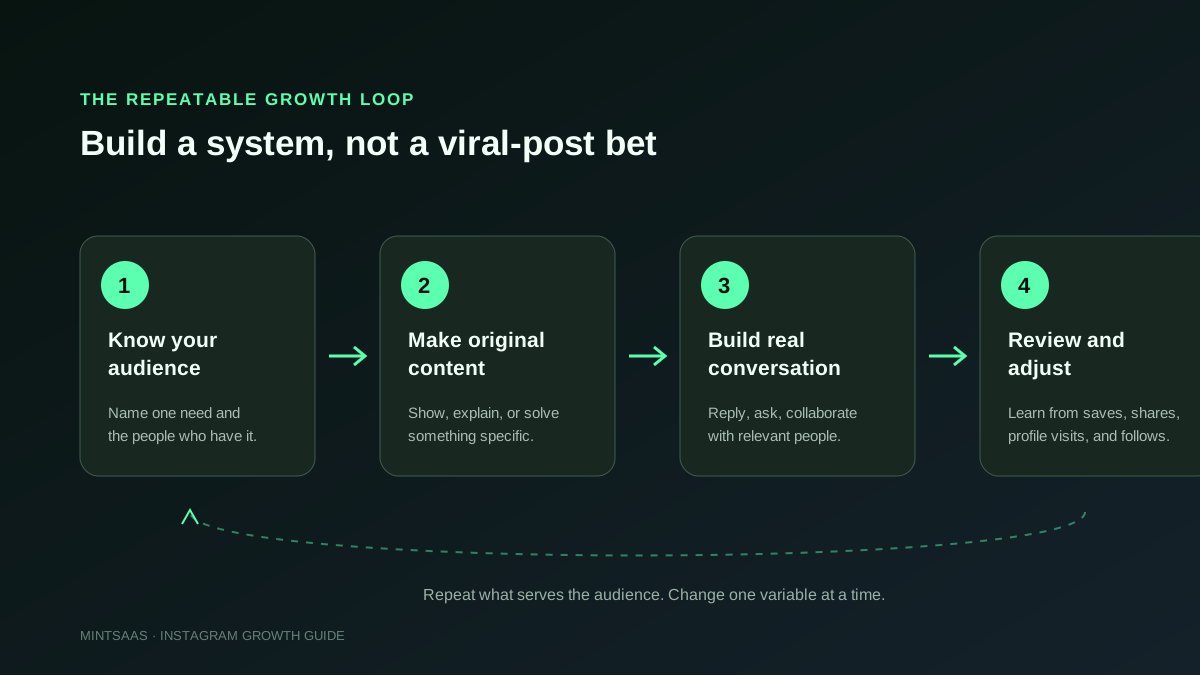
Instagram has described separate ranking systems for Feed, Stories, Explore, Reels, Search, and other parts of the app. Its explanation says these systems use different signals and are tailored to how people use each surface.[1] That’s one reason to choose a format based on the idea. Use Reels to demonstrate or entertain, carousels to organize steps people may want to revisit, Stories to keep a conversation going, and Live when a real-time discussion benefits your community.
Make your posts easier to find
Instagram Search matches a person’s search terms with text associated with accounts and content. Its Search explainer discusses matching against usernames, bios, captions, hashtags, and places, alongside the person’s activity and information about the results.[3] In practice, use the words your audience would actually search for.
Put a natural description of your topic in your profile name and bio. In your captions, name the subject early and explain what the post shows. If your post is about repairing a leaky kitchen tap, say that; don’t make the only description “Sunday reset.” Add a real location when place matters. Use a few specific hashtags only when they accurately describe the post or community. Hashtags are labels, not a promise of reach.
Write alt text when the option is available, describing the meaningful information in the image. If you work with images for your posts, tools like the MintSaaS Image Compressor can optimize your visuals before publishing. Make on-screen text readable and use enough contrast. Accessibility helps people who consume content in different ways, and it makes the post less dependent on a single visual or audio cue. Don’t stuff keywords into alt text or captions. A clear sentence is more useful than a list of search phrases.
Publish at a pace you can sustain
There’s no universal posting frequency for every account. A schedule helps when it lets you publish consistently without rushing every post. Choose a pace you can maintain for a month, then use your account’s dashboard and post-level Insights to see how people respond.
Instagram’s Best Practices hub describes guidance across creation, engagement, reach, monetization, and guidelines, including personalized tips for creators.[2] Check those in-app resources alongside your own results rather than relying on generic claims about the “perfect” posting schedule.
Batch work that benefits from batching. If you run a business, our guide on how to automate repetitive tasks in business covers similar batching principles for operations. Save customer questions in a note, draft several openings in one sitting, or record a few related demonstrations together. Leave room for timely ideas and conversations. A calendar should support your judgment, not replace it.
Before publishing, check the opening, clarity, sound, captions, spelling, and call to action. Ask yourself whether the post delivers its promise in the first line or frame. If it doesn’t, edit the post before adding more hashtags.
Treat community as part of the work
Growth that brings no conversation, trust, or useful connection is a shallow metric. Reply to genuine comments with substance. Use a Story poll or question prompt when you’re prepared to respond to the answers. If someone shares a problem, consider whether your response could help others too, while protecting their privacy.
Collaborate when audiences genuinely overlap. If you run an agency, our guide on automating client onboarding shows how to scale relationships without losing the personal touch. A joint tutorial, interview, or local event can introduce each account to people who already care about the subject. Agree on the audience, format, responsibilities, and permissions before making the post. Don’t manufacture endorsements or imply a partnership that didn’t happen.
Make the next step clear and relevant. Ask viewers to save a checklist if it will be useful later, share a resource with someone who needs it, or follow for the next installment in a real series. Avoid asking for every possible interaction on every post.
Measure progress beyond follower count
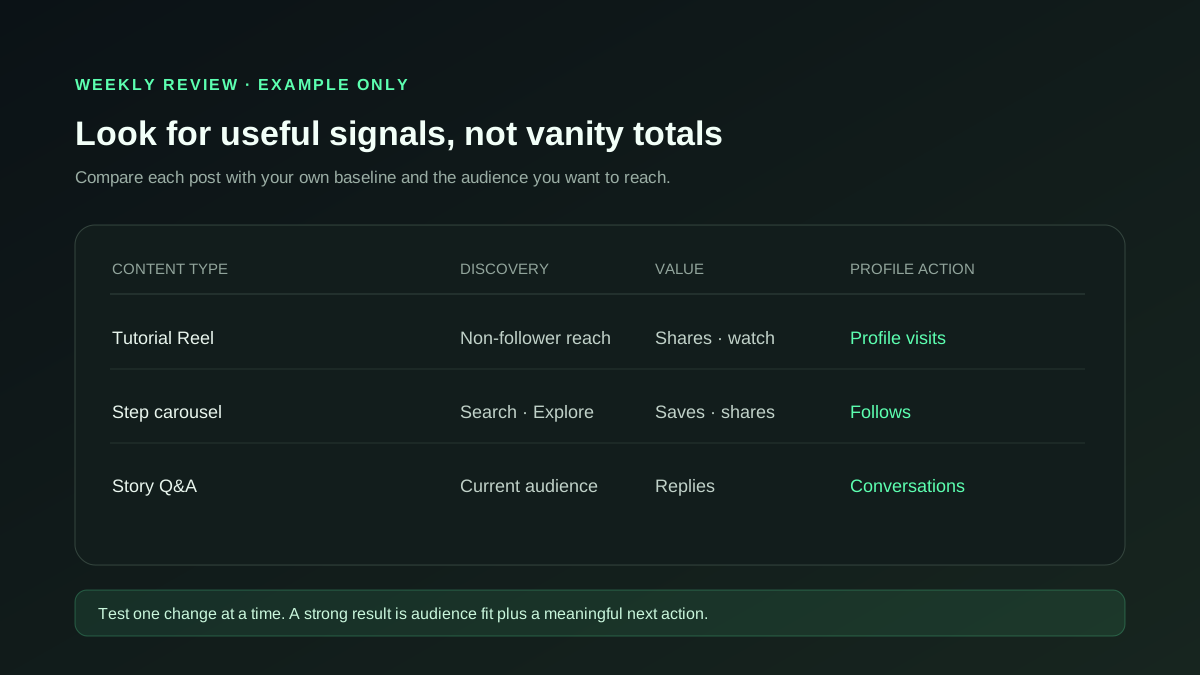
Set a baseline before changing your strategy. The same discipline applies to centralized business management: define what you measure before you optimize. Record follower count, reach, profile visits, follows attributed to content where available, shares, saves, comments, and link actions. Review posts over a consistent period. A single breakout post can be interesting, but it won’t tell you whether you’ve built a repeatable connection with your audience.
Try a simple weekly review:
- Which posts reached people who didn’t already follow?
- Which posts led to profile visits or follows?
- Which topics earned thoughtful replies, shares, or saves?
- Did the post attract the audience you actually want?
Compare subjects and formats without expecting one metric to explain everything. Instagram’s published descriptions mention predictions about actions such as time spent, comments, likes, shares, and profile taps, while also noting that ranking signals differ by surface.[1][5]
Then run one small experiment at a time. Try a different opening on a familiar topic, make a caption more specific, or use a carousel instead of a Reel. Keep the rest of your approach relatively steady so you can learn something. Record the change and result. If your numbers dip, inspect the creative and audience fit before assuming your account has been penalized.
Try this 30-day Instagram growth plan
Week 1: Clarify. Rewrite your profile name and bio for clarity. Choose three content themes and review recent posts. Note which topics led to meaningful profile visits, conversations, or follows.
Week 2: Build a small series. Plan three posts around one audience problem. Use different formats when they genuinely suit the idea. Make each post understandable on its own, with a consistent theme connecting them.
Week 3: Talk with people. Ask a useful question in Stories, respond to comments, and identify one creator or business for a relevant collaboration. Avoid generic, copy-paste pitches.
Week 4: Review and refine. Compare your posts with your baseline. Keep what attracted the right audience; revise what was unclear or difficult to produce. Plan the next month around what you learned, not a prediction about what will go viral.
The point of the month isn’t to hit a guaranteed follower number. It’s to build a working system: clear positioning, useful original content, real conversations, and a regular review habit.
What to avoid when growing on Instagram
Don’t buy followers, automate fake engagement, use engagement pods, or mass-follow and unfollow accounts. Authentic growth takes more effort than automating workflows with tools like n8n, but it builds a real audience. Inflated counts don’t create an interested audience, and they make your performance harder to interpret. Don’t repost another person’s work as your own. Get permission when needed, credit collaborators accurately, and add your own contribution.
Avoid promising results you can’t substantiate. Be cautious of services that guarantee a specific follower count by a specific date or claim secret access to Instagram’s recommendation system. Don’t hand over account credentials to a service you don’t trust. Use Instagram’s own account tools to review your status and current guidance.
Frequently Asked Questions (FAQ)
How do I grow on Instagram in 2027?
Choose a specific audience, publish original posts that serve its interests, make your profile and captions easy to understand, participate in relevant conversations, and review Insights regularly. Test a sustainable plan instead of chasing a guaranteed algorithm trick.
How often should I post on Instagram to grow?
There isn’t one cadence that suits every creator. Choose a realistic schedule, use your account’s insights, and prioritize posts you can make clearly and consistently. Instagram’s Best Practices resources include guidance and personalized tips for creators.[2]
Do Reels still help you reach new people?
Reels are one way people discover content, but they don’t guarantee reach. Instagram describes distinct ranking systems for different app surfaces, so use Reels when motion, demonstration, or entertainment suits the idea.[1]
Do hashtags increase Instagram reach?
A hashtag can describe a topic and help people find related posts, but it doesn’t guarantee distribution. Use accurate tags where they help categorize a post, and prioritize clear profile and caption language. Instagram’s Search explainer discusses hashtags alongside captions, names, bios, and places as text it may match.[3]
How can a small business get local followers?
Describe your service and location clearly in your profile and posts. Share useful examples from the area, tag a genuine location when it’s relevant, and collaborate with nearby organizations whose audiences overlap. Make your contact and service details easy to find.
Should I switch to a professional account?
A Creator or Business account may be useful if you need professional tools or Insights. Instagram describes these account types for different kinds of users and notes that professional accounts include features for performance, tools, and messages.[4] Check current feature availability and privacy implications before switching.
Why are my Instagram views high but follower growth is low?
Your posts may be reaching people who aren’t a good fit, or your profile may not explain what a new follower will get. Compare profile visits and follows with reach, then improve the connection between the post’s topic, your bio, and the next step.
Can I grow an Instagram account without paid ads?
Yes. An account can pursue organic growth through useful content, search clarity, recommendations, collaborations, and community interaction. Results vary, and organic reach isn’t guaranteed. Paid promotion is optional, not a requirement for a sound content strategy.
A sensible definition of Instagram growth
A bigger number beside your profile can feel satisfying, but the useful measure is whether you’re reaching people who care about what you make. Give those people a clear reason to stay. Publish work you can stand behind. Listen to the response and adjust with evidence.
That may feel slower than chasing a trick. It gives you something better to build on: an audience that understands why your next post is worth seeing.
Related reading on MintSaaS
- PDF Security: How to Protect Sensitive Documents Online in 2027
- How to Compress Images Without Losing Quality: The Complete 2027 Guide
- How to Automate Repetitive Tasks in Business: The 2026 Practical Framework
- Best SaaS Tools for Small Businesses in 2026: The Ultimate Stack Comparison
- Centralized Business Management Software: The Unified Operating System for Growing Companies
- What is n8n? The Ultimate Guide to Open-Source Workflow Automation in 2026
- Micro-SaaS Architecture in 2026: Fast, Lean, and Profitable
- How to Automate Client Onboarding for Your Agency: The Complete 2026 Playbook
- How to Convert Images Between Formats: The Complete Guide to WebP, AVIF, JPEG, and PNG in 2027
- WebP vs AVIF: Which Image Format Wins in 2027?
- How to Optimize Images for SEO: Complete Guide to Faster Loading and Higher Rankings
- Best Image Compression Tools for Web Developers in 2027
- How to Batch Compress Images Online: Bulk Workflow Guide for 2027
- Image Optimization for E-Commerce: Product Photos That Convert in 2027
- How to Resize Images for Social Media: Platform-Specific Guide for 2027
- SVG Optimization: How to Reduce Vector File Size for Web in 2027
- How to Optimize Images for Mobile: Responsive Image Guide for 2027
- Lossless vs Lossy Compression: When to Use Each for Images in 2027
- Image CDN vs Self-Hosted: Which Is Better for Performance in 2027?
- How to Use the HTML Picture Element for Responsive Images in 2027
- Image Lazy Loading: Implementation Guide for Web Performance in 2027
Sources
[1] https://about.instagram.com/blog/announcements/instagram-ranking-explained — Instagram Ranking Explained
[2] https://about.fb.com/news/2024/10/best-practices-education-hub-creators-instagram — Instagram Best Practices for Creators
[3] https://about.instagram.com/blog/announcements/break-down-how-instagram-search-works — Breaking Down How Instagram Search Works
[4] https://help.instagram.com/138925576505882 — About professional accounts on Instagram
[5] https://about.instagram.com/blog/tips-and-tricks/control-your-instagram-feed — How to See More of What You Want on Instagram
Free tools on MintSaaS
Try our free tools to put this guide into practice:
MintSaaS Dispatch articles are researched and synthesized with the assistance of artificial intelligence analysis, then edited, verified, and benchmarked by our engineering editorial team. Customer personal data and platform source files are strictly segregated and are never used to train or fine-tune public artificial intelligence models.
More from MintSaaS Dispatch
Handcrafted technical insights and developer tools.